
Micro-Topping and Surface Overlay
A thin cement layer poured over the slab you already have. It gives you a new surface to finish when the old one is too far gone to polish, without pouring new concrete.
What an overlay actually is
A cement-based product mixed with bonding agents and poured over the existing floor. Self-levelling versions spread themselves across the surface, flowing out flat rather than being troweled to level. As it cures it becomes a hard, durable surface in its own right.
The slab underneath stays where it is. You are adding a few millimetres of new surface, not removing and replacing structure. That is why it is quicker and cheaper than a repour, and why the building is not out of use for a concrete cure.
Once it has cured, it takes a finish like any other floor. Polish it, coat it, stain it, or seal it.
When an overlay is the right call, and when it is not
It is the right call when the surface is past saving but the slab is sound. Floors that have been cut, patched and re-patched until no two areas match. Slabs where the damage runs deeper than grinding can reach. Tile ghosting that will not come out and would only be made more obvious by a gloss finish.
It is also the answer where levels are wrong. Self-levelling overlay is the practical way to take a floor that slopes or steps and make it flat.
It is the wrong call in two situations
The existing slab could be restored instead
If the damage is surface-level, grinding and repair gets you to a finished floor without adding a new layer. An overlay covers the problem where restoration removes it, and the slab you already have is usually harder than anything poured over it.
The slab has failed structurally
An overlay is a surface. Pour it over movement, subsidence or a live crack and the same fault comes through the new layer. Where the problem is under the slab, neither an overlay nor a polish fixes it.
Where it earns its place
Levelling
Uneven floors, steps between areas, slabs that were never flat. Self-levelling overlay flows out and takes the level with it.
Covering damage
Patch networks, old repairs, tile ghosting. Where grinding would expose the history of the floor, an overlay gives you a clean surface with none of it.
Decorative work
The new surface takes stain, dye and stencil work. Logos and medallions can go into an overlay the same way they go into a polished slab.
On our Hollywood restaurant job the restrooms and back entrance had damage deep enough that grinding alone would not fix it, so those areas took a polishable self-levelling overlay before anything else went down. The rest of the floor was polished directly. Mixing the two on one job is normal.
Overlay versus a new pour
A repour means breaking out the existing slab, hauling it away, pouring new concrete and then waiting weeks before anything can go on top of it. It is disruptive, expensive, and it puts a skip and a concrete truck on your site.
An overlay is measured in millimetres rather than inches. It goes down over the floor that is already there, cures far faster than a slab, and leaves you with a surface that is flat, sound and ready to finish.
If the concrete under your feet is structurally fine and the problem is everything on top of it, you are being sold a repour you do not need.
The process
- Assessment. Whether the slab is sound, how far out of level it is, and how thick the overlay needs to be.
- Preparation. The existing floor is ground to open it up so the overlay bonds rather than sitting on a sealed surface. Loose material and failed coatings come off here.
- Priming and bonding. Bonding agents go down so the new layer keys into the old slab.
- Pour. The overlay is mixed and poured, and self-levelling versions spread out across the surface.
- Cure. Faster than a slab, but not instant. The schedule comes with the quote.
- Finish. Polish, coat, stain or seal, depending on what the room needs.
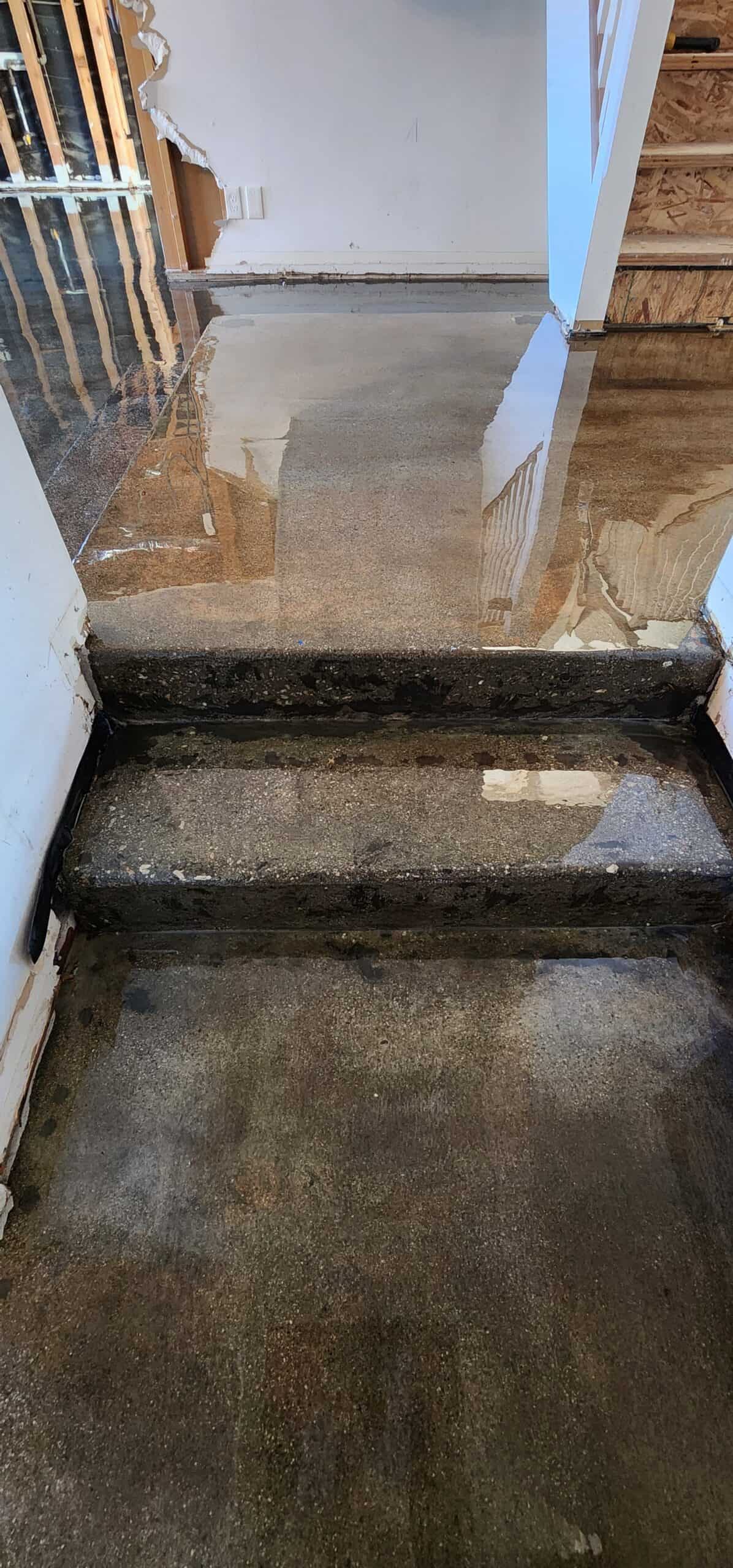
Before, during and after


What it costs
An overlay is quoted as part of the finished floor, because it is a stage rather than an end point. What moves the number is thickness, how far out of level the existing floor is, and how much preparation the slab needs before anything is poured.
It is quicker and more economical than pouring new concrete, which is the comparison that matters if you have been quoted a repour.
The quote follows a site visit. Level is not something anyone can assess over the phone.
Common questions
What is the difference between a micro-topping and a self-levelling overlay?
Both are thin cement layers over an existing slab. A self-levelling overlay is poured and flows out flat under its own weight, which makes it the right choice where levels are wrong. A micro-topping is applied thinner and worked across the surface, and suits floors that are already flat but need a new face.
Can you polish an overlay?
Yes, provided it is a polishable product. That is exactly what we used on the restrooms and back entrance of the Hollywood restaurant, where the damage was too deep to grind out but the finished floor still had to match the polished concrete around it.
Will cracks come back through the overlay?
A dormant crack that is filled and treated properly will not. A live crack, where the slab is still moving, will come through anything you put over it. Telling those apart is part of the site visit, and it is why we look before quoting.
Is it as hard as concrete?
A quality overlay cures into a hard, durable surface built for foot traffic and commercial use. The slab underneath is usually harder, which is why we restore rather than overlay wherever the existing floor can be saved.
Can it fix tile ghosting?
Yes, and it is one of the two real answers. Tile adhesive leaves a permanent pattern that grinding does not remove and a gloss finish makes worse. An overlay or a coating covers it. There is no polishing solution.
Book a site visit
We measure, check the level and the slab condition, and tell you whether an overlay is the right answer or whether restoration would get you there without one.